
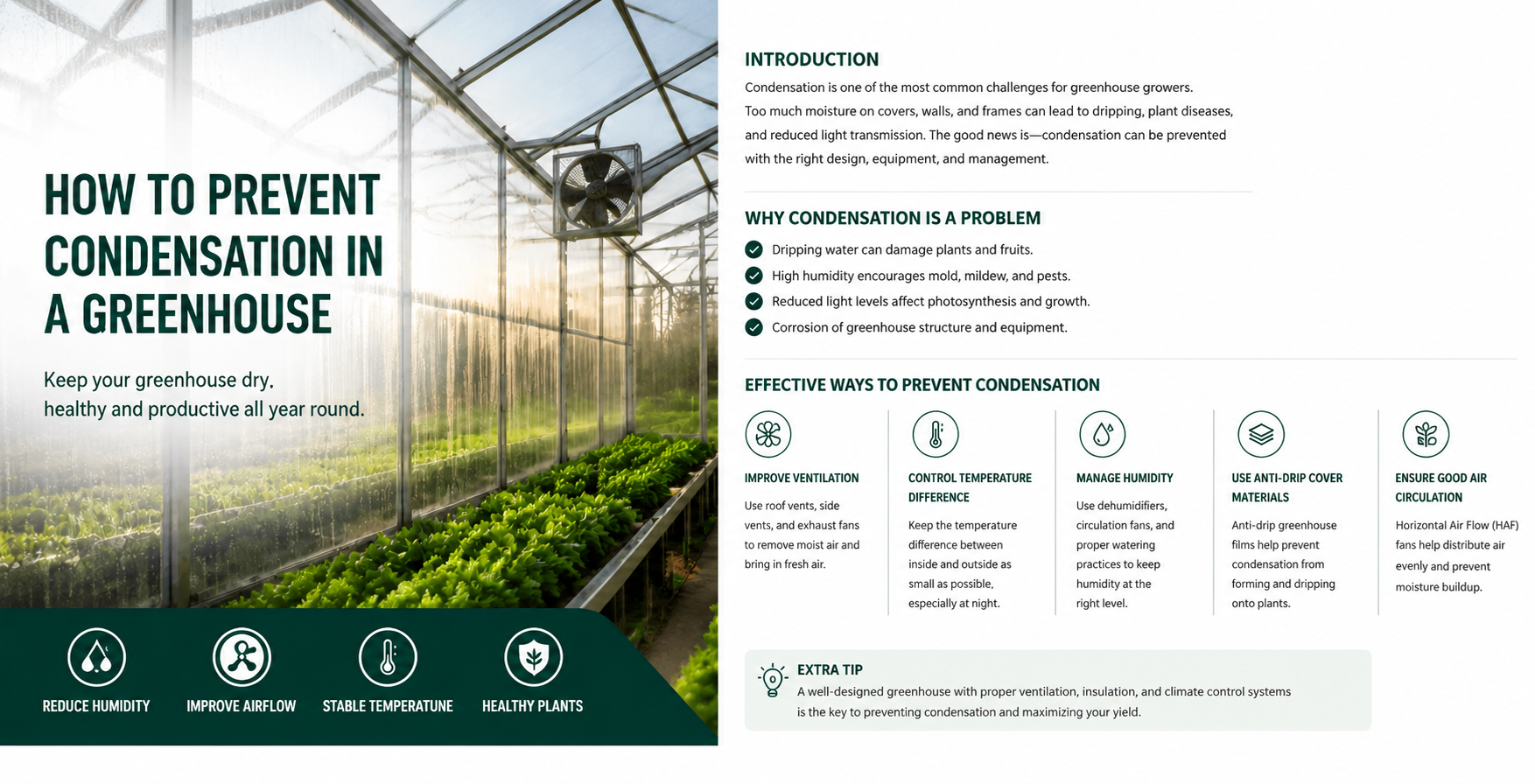
How to Prevent Condensation in a Greenhouse: Effective Solutions for a Healthier Growing Environment

Condensation is one of the most common challenges faced by greenhouse growers. While a certain level of humidity is necessary for plant growth, excessive moisture inside a greenhouse can create serious problems, including fungal diseases, poor plant development, water dripping on crops, and damage to greenhouse structures.
Understanding the causes of condensation and applying effective prevention methods can help maintain a stable greenhouse climate, improve crop quality, and increase production efficiency.
In this guide, we will explore why condensation occurs in greenhouses and the best solutions to reduce moisture buildup.
What Causes Condensation in a Greenhouse?
Condensation happens when warm, humid air inside the greenhouse comes into contact with a colder surface, such as greenhouse glass, polycarbonate panels, or plastic film. When the temperature of the surface drops below the dew point, water vapor turns into liquid droplets.
Several factors can increase condensation:
1. High Humidity Levels
Plants naturally release moisture through transpiration. Without proper ventilation, humidity can quickly build up inside the greenhouse, especially during nighttime when temperatures decrease.
High humidity conditions may lead to:
- Mold and mildew growth
- Fungal diseases such as Botrytis (gray mold)
- Reduced plant growth
- Lower crop quality
2. Poor Air Circulation
Stagnant air prevents moisture from being evenly distributed and removed. Greenhouses with insufficient ventilation often experience areas with excessive humidity, especially around plant canopies and corners.
Good airflow is essential for maintaining a balanced greenhouse environment.
3. Large Temperature Differences Between Day and Night
During the daytime, sunlight increases greenhouse temperatures and causes plants and soil to release moisture. At night, temperatures drop quickly, causing moisture to condense on cold surfaces.
Managing temperature fluctuations is one of the key steps in reducing condensation.
Effective Ways to Prevent Condensation in a Greenhouse
1. Improve Greenhouse Ventilation
Proper ventilation is the most effective method for controlling greenhouse humidity.
A well-designed ventilation system removes warm, moist air and introduces fresh air into the greenhouse.
Common ventilation solutions include:
- Roof vents
- Side vents
- Exhaust fans
- Automatic ventilation systems
For commercial greenhouses, combining natural ventilation with mechanical ventilation can create a more stable growing environment.
2. Install Horizontal Air Flow (HAF) Fans
Air circulation fans help move air evenly throughout the greenhouse and prevent moisture from accumulating in specific areas.
Benefits of HAF fans include:
- Improved temperature uniformity
- Reduced humidity pockets
- Better CO₂ distribution
- Lower risk of plant diseases
Continuous air movement helps keep plant surfaces dry and reduces condensation formation.
3. Use Anti-Drip Greenhouse Cover Materials
Traditional greenhouse films may allow water droplets to form and drip directly onto plants.
Anti-drip greenhouse film contains special additives that help moisture spread into a thin water layer, allowing it to flow down the surface instead of forming large droplets.
Advantages include:
- Reducing water dripping on crops
- Lowering disease risk
- Improving light transmission
- Creating a cleaner growing environment
Choosing high-quality greenhouse covering materials is an important part of condensation management.
4. Control Humidity Levels
Maintaining the correct humidity level is essential for healthy plant growth.
Recommended methods include:
- Avoiding excessive irrigation
- Watering earlier in the day
- Improving drainage systems
- Using dehumidification equipment when necessary
- Monitoring humidity with sensors
A greenhouse climate control system can automatically adjust ventilation, heating, and humidity levels to maintain optimal growing conditions.
5. Maintain Stable Temperatures
Reducing sudden temperature changes can significantly decrease condensation.
Effective methods include:
- Using greenhouse heating systems during cold nights
- Improving greenhouse insulation
- Installing thermal screens
- Maintaining consistent air movement
A stable temperature reduces the chance that warm humid air will reach the dew point.
6. Optimize Greenhouse Design
A well-designed greenhouse naturally helps prevent condensation problems.
Important design considerations include:
Proper Roof Structure
A suitable roof angle allows condensed water to flow toward the sides instead of dripping onto crops.
Efficient Ventilation Design
The position and size of vents directly affect airflow performance.
High-Quality Materials
Durable greenhouse structures, advanced films, and climate control systems contribute to better moisture management.
Why Preventing Condensation Matters for Greenhouse Production
Effective condensation control provides several benefits:
Healthier Crops
Lower humidity reduces the risk of fungal infections and improves plant growth.
Higher Yield and Quality
A stable growing environment supports better photosynthesis and crop development.
Lower Maintenance Costs
Reducing moisture helps protect greenhouse structures, equipment, and growing systems.
Better Energy Efficiency
Proper climate management reduces unnecessary heating and cooling costs.
Conclusion: Create a Better Greenhouse Climate with Proper Condensation Control
Condensation prevention requires a combination of good greenhouse design, efficient ventilation, humidity management, and suitable covering materials.
Whether you operate a small greenhouse or a large commercial growing facility, controlling moisture is essential for achieving stable production and high-quality crops.
A professionally designed greenhouse with proper ventilation systems, anti-drip materials, and climate control solutions can help growers create the ideal environment for year-round cultivation.